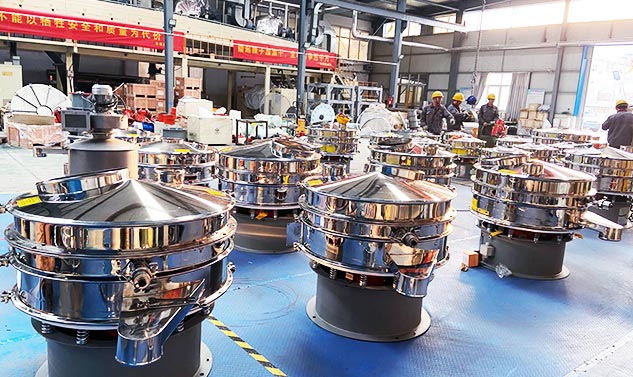
Connecting a vacuum conveyor to a rotary vibrating screen requires more than just piping. The physical mounting framework and the mechanical discharge components dictate the reliability of the entire system. Drawing on four decades of industrial manufacturing experience, we isolate two critical hardware considerations: hopper fixation and discharge valve selection.
Vacuum Hopper Fixation Methods
The vacuum hopper must sit securely above the rotary vibrating screen to facilitate gravity-fed discharge. Vibration from the screen below mandates robust support structures. Depending on the plant's ceiling height and maintenance access requirements, engineers specify one of three support configurations:
Cylindrical Brackets: Standard, rigid mounts suitable for fixed installations with ample vertical clearance.
Hand-Crank Brackets: Adjustable mounts that allow operators to manually raise or lower the hopper. This is highly advantageous for routine cleaning, screen mesh replacement, or multi-product processing.
Gantry Frames: Heavy-duty, standalone floor structures. These isolate the conveyor's weight from the screening equipment entirely, preventing structural stress on smaller rotary vibrating screens.
Specifying the Discharging Valve
The discharging valve sits at the base of the vacuum conveyor. It must hold a vacuum during the loading phase and open completely during the discharge phase. Selecting the wrong valve leads to material bridging, vacuum leaks, and system failure.
Depending on the material characteristics, conveying heights, and total conveying distances, specify one of the following:
Turning Door (Flap Valve): Fast-acting and provides a large, unobstructed opening. Best for bulk powders that tend to pack or bridge.
Butterfly Valve: Offers a tight seal and simple pneumatic actuation. Suitable for free-flowing granules and short-distance conveying setups.
Rotary Valve: Delivers a continuous, metered discharge rather than a batch dump. Required when the rotary vibrating screen demands a highly precise, trickle-feed input over long conveying distances
Correctly matching the bracket and valve to your specific material profile eliminates bottlenecks and cuts maintenance downtime significantly.
Ensure your equipment specifications meet your production targets. Download our complete technical specification sheets for vacuum transfer components, or consult our technical engineers to design your automated feeding framework.
 24 Hours Online Service For You: +86 13462227588